
Introduction
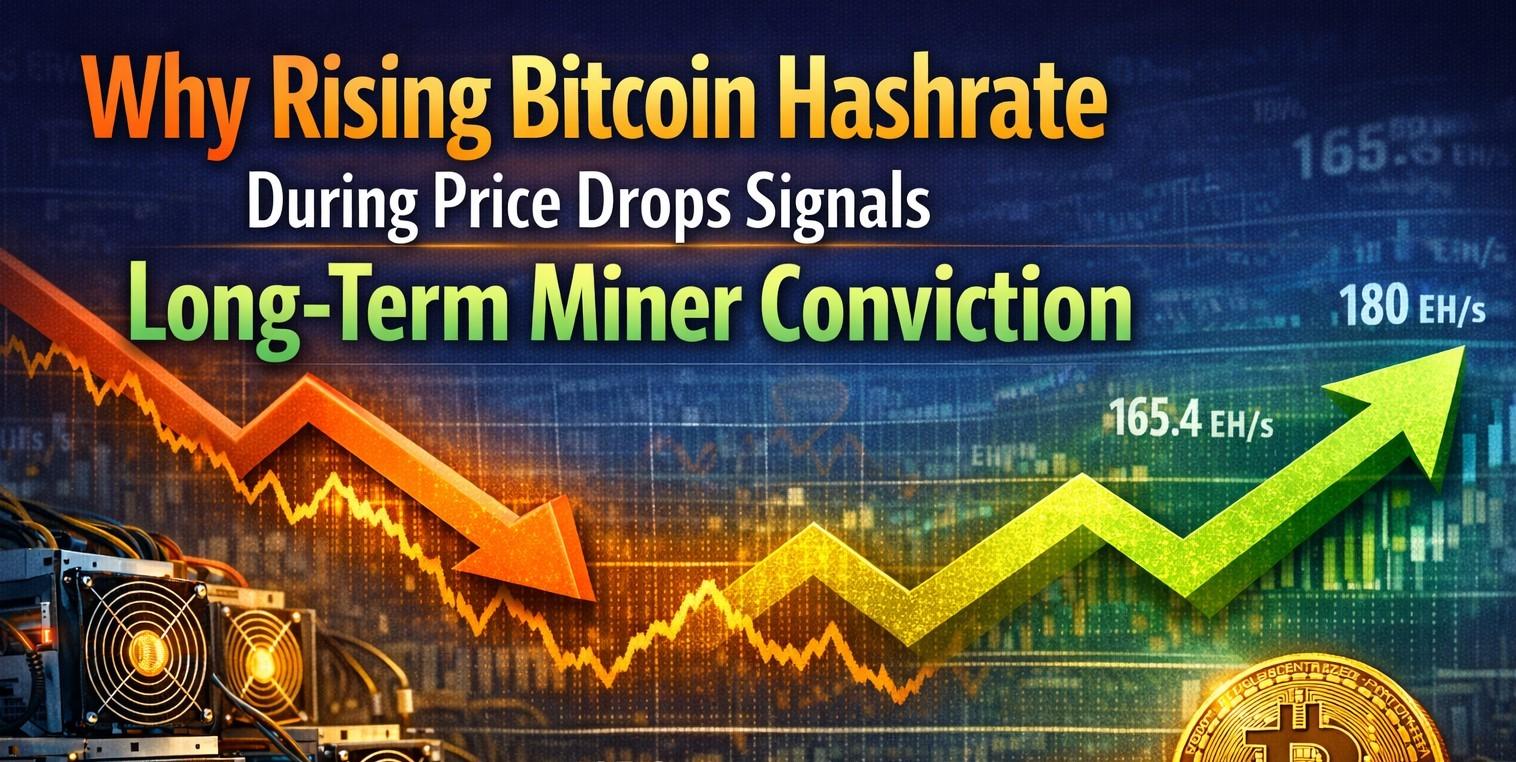
When prices fall, headlines focus on fear. When hashrate rises at the same time, few people notice. This divergence declining market prices alongside increasing network hashrate reveals something far more important than short term volatility. It highlights miner conviction.
Instead of asking whether downturns hurt operators, a more meaningful question emerges
Why does hashrate often increase even when Bitcoin’s price drops?
The answer provides insight into long term positioning, infrastructure strategy, and how experienced operators think differently from traders.
The Overlooked Metric: Hashrate as a Confidence Indicator
Hashrate represents the total computational power securing the Bitcoin network. Unlike price, which reacts to sentiment and macro news, hashrate reflects capital deployment.
Deploying infrastructure requires:
- Hardware acquisition
- Facility planning
- Power agreements
- Cooling optimization
- Long-term operational budgeting
These are not emotional decisions.
When hashrate rises during price corrections, it suggests that operators are expanding capacity despite temporary market weakness. That behavior signals structural confidence rather than speculation.
In other words infrastructure players are preparing for the future, not reacting to the present.
Why Professional Operators Expand During Market Weakness
Price volatility often creates three structural shifts that favor long term participants:
1. Reduced Competitive Pressure
Short term participants tend to exit during downturns. As inefficient operations shut down, competition temporarily softens. This can create strategic positioning advantages for those with optimized cost structures.
2. Infrastructure Pricing Adjustments
Market slowdowns can influence hardware pricing, availability, and deployment timelines. Operators with liquidity and planning discipline may use this period to upgrade efficiency or expand capacity under less crowded conditions.
3. Long Term Cost Averaging
Rather than attempting to time bottoms, structured operators focus on long term production cost. Accumulating network exposure during lower price environments can improve overall portfolio positioning if future cycles recover.
This approach is fundamentally different from trading volatility.
The Structural Difference Between Traders and Infrastructure Operators
Volatility rewards speed and timing. Infrastructure rewards planning and endurance. Traders rely on market entry precision, technical signals and sentiment timing. Whereas infrastructure operators rely on energy stability, cooling efficiency, uptime consistency and multi-year ROI modeling. This is why hashrate growth during price declines is so meaningful. It shows which participants are structurally committed.
The UAE Factor Why Infrastructure Stability Matters in Volatile Cycles
Regions with predictable infrastructure environments attract long-term operators during uncertain periods. In the UAE, several structural advantages contribute to operational stability such as reliable power grid, data center grade facilities, advanced cooling systems designed for high temperature climates and business friendly digital asset framework. Rather than reacting to volatility, operators in stable jurisdictions focus on uptime, cost efficiency, and scalability. This is where infrastructure-first platforms such as cryptominers.ae position themselves differently not around hype cycles, but around operational consistency designed for multi-year deployment strategies.
Efficiency Becomes the Ultimate Differentiator During Price Contractions
When prices rise rapidly, inefficiencies are often hidden.
When prices fall, inefficiencies are exposed.
During downturns, survival depends on energy cost optimization, cooling performance, equipment longevity and minimal downtime. Operators who built around efficiency continue operating steadily, while high cost setups struggle. This dynamic explains why network strength often consolidates rather than collapses during corrections.
Rising Hashrate as Institutional Signal
Expanding hashrate during bearish phases frequently correlates with:
- Facility expansion
- Fleet upgrades
- Long-term power agreements
- Institutional capital allocation
Large scale deployment requires forecasting models extending beyond short term volatility. Infrastructure capital does not move based on weekly candles. Therefore, rising hashrate during falling prices reflects forward looking assumptions about future network value.
Why Downturn Deployment Can Strengthen Long-Term ROI
From a capital allocation perspective, downturn deployment may offer lower entry infrastructure costs, reduced network competition during setup, potentially improved production cost basis and strategic readiness before sentiment reverses. Instead of reacting emotionally to price charts, disciplined operators prepare during quieter periods. By the time bullish narratives return, infrastructure is already active.
The Psychological Edge of Infrastructure Strategy
Volatility is stressful for traders. Infrastructure strategy reduces emotional exposure because production is continuous, planning is multiyear, returns are modeled structurally and focus remains operational rather than reactive. This mental shift often separates long term operators from short-term participants.
Infrastructure-First Platforms and Cycle Readiness
Operators who prioritize stable power architecture, industrial cooling environments, and professional deployment planning and scalability options are better positioned during volatile cycles. Platforms built around structured environments rather than speculative messaging allow participants to focus on efficiency and durability instead of daily price movements.
This infrastructure-first model is why many strategic participants explore structured UAE-based environments like cryptominers.ae during consolidation phases rather than waiting for euphoric conditions.
Final Perspective What Hashrate Really Tells Us
Price shows emotion.
Hashrate shows commitment.
When price declines but hashrate climbs, it reveals something deeper than volatility:
- Long-term belief
- Capital conviction
- Infrastructure expansion
- Strategic patience
For observers focused only on charts, downturns appear discouraging. For infrastructure-focused operators, downturns often represent preparation phases. The next cycle does not begin when headlines turn bullish. It begins when infrastructure quietly expands during uncertainty. And rising hashrate during price drops is one of the clearest signals of that expansion.
Comments